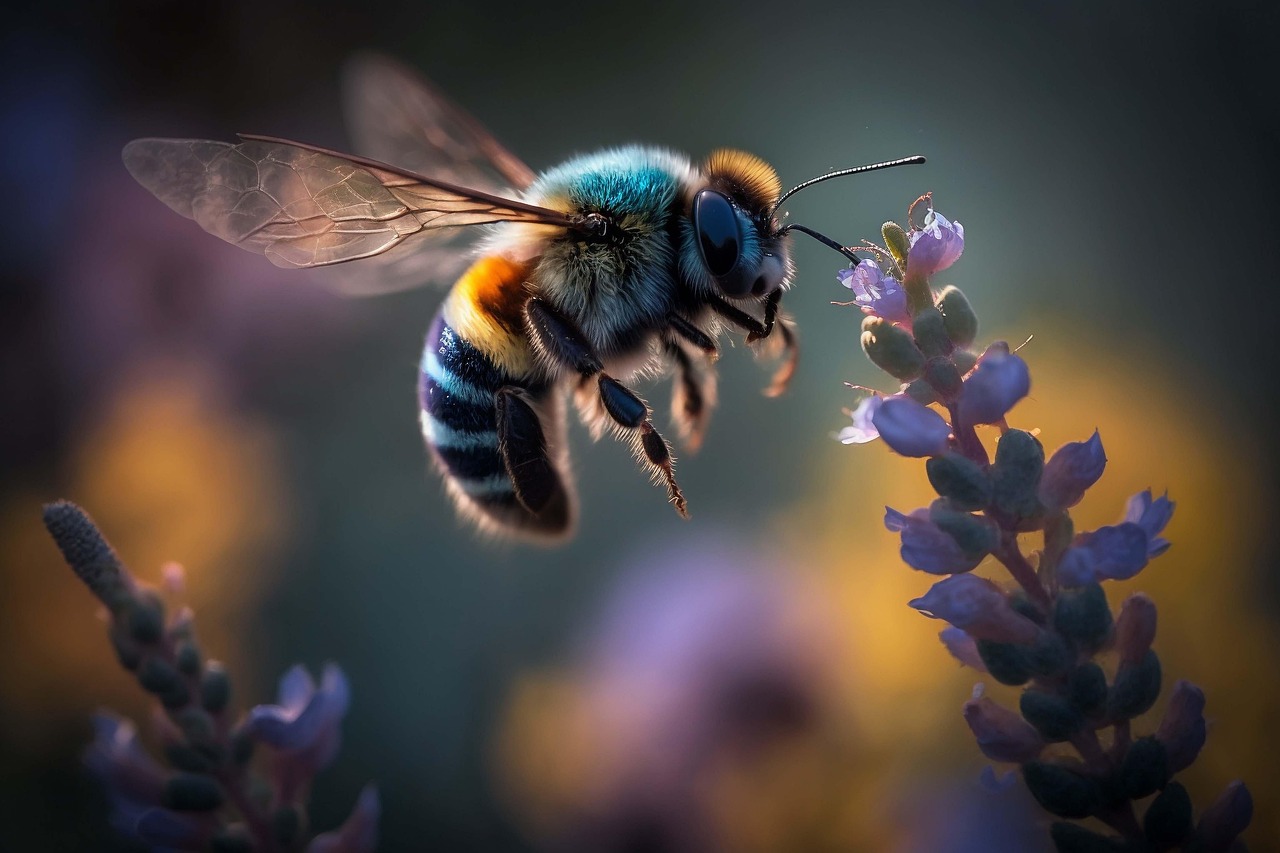
How AI Can Prevent Biodiversity Collapse and Save the Planet
McGill University researchers believe AI can close the 7 essential knowledge gaps and slow—hopefully reverse—biodiversity collapse.
Global biodiversity is the total variety of species and ecosystems on Earth. It’s declining rapidly. I read the 2019 IPBES report, and it’s not looking good. 25% of species are on the brink of extinction, 47% of natural ecosystems have been destroyed, and the biomass of wild mammals has dropped 82%. If you’re shocked, good.
Those statistics are unnerving, but the current extinction rate might keep you up at night. Species go extinct frequently. It’s just the way nature works. Species succumb to pressure from diseases, rapid climate change, competitors, etc. And we have some pretty good data on the natural extinction rate. It’s commoly explained like this: for every 1,000,000 species, 1 is expected to kick the bucket each year, assuming there are no mass extinction events like large asteriod impacts or volcanic eruptions. However, low estimates put the current extinction rate at 1,000 greater than this. High estimates put it at 10,000 greater. That’s alarming.
But who cares? We all should. We depend on global and local ecosystems for our not just our prosperity but our health. From maintaining food supplies to reducing pandemics, from underpinning global GDP to providing clean water and air, if biodiversity collapses, humanity will pay the price. From maintaining food supplies to reducing pandemics, from underpinning global GDP to providing clean water and air, if biodiversity collapses, humanity will pay the price. For example, according to the International Union for Conservation of Nature, ecosystems provide over $33 trillion each year. For reference, the annual global GDP is roughly $110 trillion. If global ecosystems collapse, then the party is over. And the worst impacted will be the nearly billion people living below the poverty line.
You don’t want to here it, but here’s why it’s our fault:
- Habitat Loss: To make room for infrastructure, food production, mining, etc. humanity has been clearing forests on a massive scale for centuries. We’ve cleared 32 million hectares of old-growth forest between 2010 and 2015 alone. This is a bit more than the size of Italy within only a 5 year period. Humanity’s pollution is also a major contributor to habitat loss. I’ve seen it in person. I’m writing this from the Brazilian Amazon, where, for over 20 years, illegal miners have been using mercury to extract gold from the soil. And it has accumulated to a disturbing degree in the Amazon basin.
- Invasive Species: When it comes to ecosystems, it’s all about equilbrium. Every element is in balance with other elements, and when small changes happen, they find a new equilibrium. But big changes, like an outside species being introduced, though, are a different story. Just look at what happened with the zebra mussel. It’s caused upwards of $5 billion in damage in North America alone. Orginally from the Caspian and Black Seas, it was transported via ballast tanks to Europe in the 18th century. And today it is putting important ecosystems in the Great Lakes at risk.
- Irresponsible Fishing: Fish populations are being harvested at a faster rate than they can replenish themselves. Global fish consumption is up 3.2%, and the abundance of marine species is down 39%. Also, nearly 40 tonnes of unwanted marine animals are accidentally caught per year. If you do the math, it’s obvious we can’t continue like this. Coral reefs and other marine ecosystems simply won’t survive. And regulations are not enough, as they are not properly enforced.
- Poaching: So far, roughly 30,000 species no longer walk the planet due to poaching. Many more might follow suit. There’s just too much money to be made in trafficking rare animals and selling products like rhino horn. The profit margins are huge for rhino horn, with some estimates putting it at $20,000 per kilo. Conservation efforts, such as the wild idea of injecting still-attached rhino horn with radioactive material, are helping. But let’s be honest: such profits are too alluring and poaching isn’t going to end as soon as we would like.
- Climate Change: Humans have been burning hydrocarbons like oil and coal en masse since the 18th century. This has this rapidly increased the amount of carbon dioxide and other greenhouse gases in the atmosphere. Recent measurements claim there are 422 parts per million. To make matters worse, carbon sinks like wetlands, forests, and the ocean have been in either destroyed or altered. Ecosystems are put
Combating Biodiversity Collapse
Combating biodiversity collapse is complex. The Kunming-Montreal Global Biodiversity Framework (GBF), though, is a big step in the right direction. A creation of the 2022 UN Biodiversity Conference, this framework comprises an array of ambitious goals, including protecting and restoring natural habitats, reducing threats to ecosystems and vulnerable species, meeting humanity’s needs in a more sustainable manner, providing the necessary funding and expertise for meeting these goals, etc. But the world is unlikely to meet these goals by the target year of 2030. The biggest problems are data collection and analyses. With traditional conservation efforts, researchers are just not able to cut it.
“Unfortunately, despite large volumes of data being collected, nearly all GBF targets and indicators are missing essential information, which is needed both to establish baselines and to monitor progress.” — Pollock, L.J., Kitzes, J., Beery, S. et al.
Fortunately, researchers from McGill University recently published a paper in which they detailed the 7 gaps in the knowledge needed to stop biodiversity collapse, all of which can likely be filled by some form of AI. Here they are:
1. The Linnaean Shortfall is the gap between the amount of Earth’s species and the amount researchers have formally described. Of the estimated 8.7 million eukaryotic species, only 2 million have been identified. But this is a hotly debated estimate. The gap might be much larger. Of all the knowledge shortfalls, some researchers consider the Linnaean to be the most important in conservation, as species cannot be understood if they are not even known.
2. The Prestonian Shortfall is the lack of understanding about the abundance of a species and how this abundance has changed across time and space. Such knowledge is important for understanding a species’ risk of extinction and the effects of conservation efforts. Despite this, researchers struggle to physically count members of a species or estimate their total numbers.
3. The Wallacean Shortfall is the lack of information about the biogeographic distribution of a species, which is usually collected by occurrence data that comes from crowdsourced programs. Researchers need this information the large-scale movement of species and how their populations vary over time. The problem is that researchers are overwhelmed with processing this data, some 3 billion records, into a useful form. There are simply not enough researchers, and their tools are not efficient enough.
4. The Hutchinsonian Shortfall is the lack of knowledge about species resilience to changes in abiotic factors like rainfall, average temperature, soil condition, etc. The importance of such knowledge is more relevant today than at any other past period due to climate change. Collecting data for this is complicated, as it depends on studying both the physiology of a species and occurrence data.
5. The Raunkiaeran Shortfall is the lack of knowledge about species’ traits and how these traits interact with an ecosystem, other traits, and other species. Collecting this data has been too intensive to be feasible.
“Obtaining the true distributions of trait values within a given population requires a comprehensive assessment of every individual’s traits to be conducted within a specified time frame, which is logistically impossible.” — Pollock, L.J., Kitzes, J., Beery, S. et al.
6. The Darwinian Shortfall, as the reader could probably surmise, is the gap in understanding about the evolution of the tree of life, particular branches, individual species, and specific species’ traits. What researchers already know has come from analyzing the fossil record and DNA fragments, but many large gaps still exist.
7. The Eltonian Shortfall is the gap of knowledge about how species’ distribution and abundance are affected by interactions with other species. This includes predation, competition, parasitism, etc. Collecting data for this and understanding it are highly difficult, as species’ interactions in complex ecosystems are not so easily identified and measured.
“The complexity of ecosystems and food webs makes it challenging to identify the presence and strength of pairwise interactions.” — Pollock, L.J., Kitzes, J., Beery, S. et al.
AI to the Rescue
Artificial Intelligence has wowed, worried, and annoyed all of us at this point. It’s been used to more efficiently diagnose patients and find unique drug formulae. It’s helped us optimize logistics, enabled next-generation fraud detection, and become a valuable tool in high-level mathematics. Even Terrance Tao, perhaps the greatest living mathemtician, has made it a regular part of his research. But AI has made news and online content less trustworthy, and writing has become a nightmare, as seemingly everything is incorrectly labeled as AI generated. AI has also replaced hundreds of millions of workers, exascerabated our sexism and racism, and it might someday destroy humanity. Before it does so, it has the chance to save it.
AI is already being used to close the 7 knowledge gaps and stop biodiversity collapse. For example, the Mila – Quebec Artificial Intelligence Institute created Antenna to give researchers, students, and the average person a platform to upload images and have them analyzed by machine learning algorithms. Their AI is capable of identifying invertebrate species, particularly insects, in the photos. So far, well over 5 million images have been uploaded and processed. Hundreds of new species have already being indentified, and countless more are now better understood in terms of their physiology, distribution, resilience, interactions, etc.
“Antenna cost-effectively and rapidly classifies a wide range of species in a large number of images, building a rich dataset that grows and updates over time.” — Antenna – The Insect Data Platform
And there are numerous similar projects cropping up, including BioClip, BIOSCAN-CLIP, WildCLIP, GeoLifeCLEF, ICARUS, and iNaturalist. Without delving too deeply into what these are and how they work, all of them use AI to make sense of data from images, satellites, bio-acoustic recordings, environmental DNA, and remote sensing data to indentify and understand species. They use open source databases like TreeOfLife-10M, the largest dataset of AI friendly biological images, ReptTraits, AVONET, EltonTraits, and LepTraits, all of which allow researchers and the public to upload information. Both the AI being used and these databases are growing quickly.
The future is in the field of imageomics, an emerging field in which specialized machine learning algorithms can process this vast amount of data and produce results to help researchers, policymakers, and conservationists close the 7 seven knowledge gaps and reverse biodiversity collapse. Hopefully.